n.The changing bodily, emotional and environmental conditions that affect which possibilities appear available, attractive or threatening to you, often while the possibilities themselves stay exactly where they were.
Would it look this steep tomorrow?
johnstoszkowski.comProvisional
The note
The same life, a week later
Imagine somebody who’s exhausted and looking at their future.
Everything seems difficult. Their existing commitments feel oppressive. New possibilities seem unrealistic or threatening.
A week later, rested and energised, they look at exactly the same circumstances. Nothing fundamental has changed, but the world seems more open.
Perhaps our sense of possibility has something like weather.
I particularly like this because it challenges an assumption that underlies much conventional decision-making advice: that we can always inspect our available options from a stable, detached standpoint.
And crucially, possibility weather isn’t the same as reality. A difficult day can make your world look smaller without the world itself having become smaller.
An everyday example
Friday evening, Saturday morning
It’s Friday evening. You’ve had a rotten week. You’re tired, hungry and generally fed up with everybody.
A friend sends a message asking whether you fancy going out.
Friday, 19:12
Fancy the Plough tonight? Jo and Priya are coming
Can’t tonight, knackered x
Saturday, 10:40
Same again tonight? Same lot
Go on then!
Absolutely not. The thought of getting dressed, going somewhere busy and spending three hours talking to people seems exhausting. You decline.
The following morning, you’ve slept well, eaten breakfast and had a lovely walk. Your friend sends another invitation. Same people. Same sort of evening. This time, it sounds rather appealing.
What changed? Not necessarily the opportunity itself. Something about your condition has changed what that opportunity feels like.
Now think about bigger decisions. A job that feels intolerable when you’re exhausted might look rather different after a few days away. A challenging conversation that seems frightening on Monday might feel manageable on Thursday.
We don’t always encounter the same possibilities in the same way.
Something to try
Check the forecast
Here’s a weekend’s worth of possibilities: the pub, a hill, work, your mum’s, and the Spanish class you keep meaning to start. Change how you slept, what you’ve eaten and the week you’ve had, and watch what happens to them. Tap any of them to look closer. Then show the map.
Swipe along the lane
The possibility forecast
Tap a place to see three things that are easy to muddle.
Before making a permanent decision about your life, might it be worth noticing the weather you’re making it in?
The eyes, or the judgement?
There’s a well-known line of research on this. In 1999 Mukul Bhalla and Dennis Proffitt reported that hills looked steeper to people who were tired or carrying a heavy backpack. Later studies reported they looked less steep with a friend beside you, or after a sugary drink. Then other researchers found the backpack effect vanished when people were given a convincing story about why they were wearing it, which suggests they were judging the hill differently rather than seeing it differently.
That argument is still going, and it’s exactly the question this note leaves open.
Not to be confused with
Similar species
A new word has to earn its place, so here are its nearest neighbours, and how to tell them apart in the field.
MoodMood is part of it. But Possibility Weather is about the practical world that appears in front of you. A door can seem like an invitation, an obstacle or an escape.
AffordancesJames Gibson’s word for what an environment offers a creature with particular abilities. A steep hill affords one thing to a rested walker and another to an exhausted one. Possibility Weather is the same hill, the same person, a different day.
The hot–cold empathy gapGeorge Loewenstein’s name for how badly we predict, when calm, what hunger, tiredness or craving will do to us. That’s about forecasting your future self. Possibility Weather is about the view while you’re standing in it.
HALTDon’t decide anything when you’re Hungry, Angry, Lonely or Tired. Good advice, but it treats your condition as interference. Possibility Weather says it’s part of how the world shows up at all.
Earlier sightings
Who spotted it before me
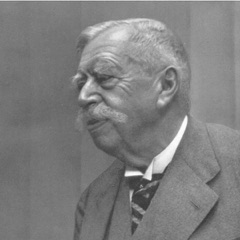
Jakob von Uexküll A Foray into the Worlds of Animals and Humans, 1934
Uexküll’s concept of Umwelt challenges the assumption that organisms simply encounter an identical environment and process its contents differently. Different organisms inhabit different meaningful worlds, made by their particular capacities and their relationships with their surroundings.
I’d extend the enquiry from differences between organisms to changes within one person. Same Umwelt on Friday and Saturday? I’m not so sure. I made a short film about his tick.
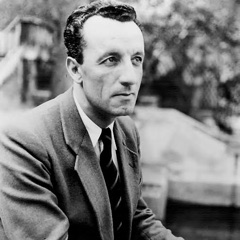
Maurice Merleau-Ponty Phenomenology of Perception, 1945
Merleau-Ponty would be particularly useful here. Our bodies aren’t merely objects we carry around while a detached mind observes the world. Our embodied capacities are part of how the world is met at all. “Consciousness is in the first place not a matter of ‘I think that’ but of ‘I can’,” as Colin Smith translated him.
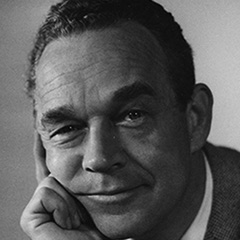
James Gibson The Ecological Approach to Visual Perception, 1979
Gibson’s concept of affordances gives us another relevant distinction: environments offer possibilities for action in relation to the capacities of the creature encountering them. “The affordances of the environment are what it offers the animal, what it provides or furnishes, either for good or ill.” A steep hill affords quite different possibilities to a rested walker, an exhausted walker, or somebody with limited mobility.
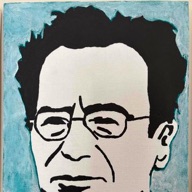
Ray Peat Generative Energy, 1994
Peat is the provocative voice here. He thought an organism’s energy shapes its capacity to respond to its environment, and that stress narrows what a creature can do with what’s in front of it. I’d keep his broader theories apart from the established findings, and I certainly wouldn’t treat metabolism as a complete explanation of perception. But he asks a good question: what is the world like for an organism that’s running low?
Where it gets complicated
The weather isn’t always wrong
Possibility Weather isn’t simply mood. Mood is part of it, but the idea concerns how our condition changes the practical world that appears before us. A difficult conversation can appear threatening or interesting. An unfamiliar situation can seem full of possibilities or impossibly complicated.
But I wouldn’t argue that having more energy always means seeing reality more accurately. Sometimes exhaustion makes us less tolerant of nonsense. Sometimes anxiety alerts us to genuine danger. Sometimes feeling wonderful makes us reckless. And some possibilities genuinely disappear because our circumstances change.
So we need to distinguish three things: the possibilities that actually exist, our present capacity to pursue them, and how those possibilities appear to us. They interact, but they aren’t identical.
The weather changes what the landscape looks like. It doesn’t mean the landscape is imaginary.
None of this means our problems are just a matter of low energy. Sometimes the world really is difficult. The question is how our condition takes part in what becomes visible and possible.
And it raises questions I can’t yet answer. Does exhaustion actually diminish what someone can perceive, or mainly how they evaluate it? Can tiredness make somebody unusually perceptive about something they’ve been ignoring?
The difficult questionHow much of what seems impossible today is a judgement about the world, and how much is a judgement made from our present condition?
Admit oneOpen-air cinemaComing soon
A short film
There’ll be a film of this one, three or four minutes long. When it’s done it’ll play here and in the open-air cinema.
Provisional
Field status
Open to correction
This is a working concept, a way of describing an experience that deserves closer attention. I’d keep the metaphor separate from any stronger claims about biological mechanisms. It might survive further investigation, it might need refining, or it might turn out to be better explained by a philosopher who’s been dead for two hundred years. That’s part of the enjoyment.
If you think I’ve got it wrong, or you’ve noticed your own weather doing something I haven’t, I’d like to hear about it.