n.The enjoyment, freedom or vitality an activity can lose when it becomes answerable to a purpose beyond itself, and its worth starts to depend on what it produces.
Would you still have gone if it didn’t count?
johnstoszkowski.comProvisional
The note
Something else has entered the room
I’ve lived this one recently.
You begin reading philosophy because you love it. You discover an unusual thinker, write something about them, and share it with other people.
Then you decide to make a living from it.
Suddenly you’re asking whether the article will attract readers, whether the video might generate enquiries, and whether the topic is sufficiently relevant to potential clients.
You might still enjoy the work. You might even make something excellent. But something else has entered the room.
What makes this interesting is that the tax doesn’t have to be financial. A hobby can become less enjoyable when you begin monitoring your improvement. A walk becomes something you must complete to hit your step count. An enjoyable conversation becomes an opportunity to make a useful contact.
The activity hasn’t necessarily changed. Your relationship to it has.
An everyday example
You buy a fitness tracker
You enjoy walking. You like getting outside, seeing what’s happening in the fields, noticing how things change with the seasons. Sometimes you walk for hours. Sometimes you stop after twenty minutes because something catches your eye.
Then you buy a fitness tracker.
Suddenly you have a daily step target. You start checking your progress. You take the long way home to reach ten thousand steps. A perfectly enjoyable afternoon begins to feel faintly disappointing because you haven’t done enough.
Nothing has changed about walking. Except now it has to produce something.
Something to try
Take the same walk three times
Same path, same afternoon, same dog. Only the reason changes. Pick one and set off.
A footpath from a fingerpost to a cottage, past a beck with a heron, a bramble on a wall, a stile where Pat is leaning, and a bench looking at a rainbow.
0steps
The walk log
Why
What got counted
What you noticed
Just walking
Nothing
A heron, the first blackberries, Pat’s knee, a double rainbow
For your steps
10,000 steps
Not much
For the survey
23 species
23 species, a heron, and that Pat’s orchids are over
Two of the walks came home with a number. One counted how far your legs went. The other counted what you saw.
It isn’t only a hunch
In 2016 Jordan Etkin ran six experiments in which people walked, read or coloured in, and some of them could see a running count of what they’d done. The people being counted did more, enjoyed it less, and said it felt more like work. One detail stuck with me: when the reading was presented as useful work in the first place, counting it didn’t spoil it. The tax seems to fall hardest on the things we thought were free.
Not to be confused with
Similar species
A new word has to earn its place, so here are its nearest neighbours, and how to tell them apart in the field.
The overjustification effectA reward can make you less interested in something you already liked. In 1973 children who were promised a certificate for drawing with felt-tip pens drew less once the certificates stopped. It needs a reward. The tax doesn’t: a step count will do, and so will an audience.
Goodhart’s lawWhen a measure becomes a target, it stops being a good measure. That’s about what happens to the number. The tax is about what happens to you.
CommodificationTurning something into a thing that can be bought and sold. The tax needs no market. You can pay it on a walk nobody will ever buy.
BurnoutExhaustion. The tax can be paid by someone full of energy, who has simply stopped looking up.
Earlier sightings
Who spotted it before me
Alasdair MacIntyre After Virtue, 1981
MacIntyre distinguishes between the internal and external goods of a practice. Internal goods are realised through taking part in the practice itself. External goods include money, prestige and status. He doesn’t reject external goods. His concern is what happens when their pursuit begins to dominate the practice they’re supposed to sustain.
He has a lovely example: a child paid in sweets to play chess, who at first has every reason to cheat, and who might one day come to love the game for what it is. The Usefulness Tax is that journey in reverse.
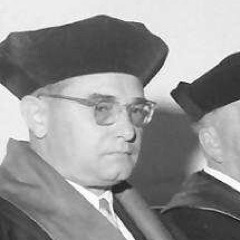
Eugen Fink Oasis of Happiness, 1957
Fink gives us a richer understanding of play as an activity with its own significance, rather than something that has to be justified by what it produces afterwards. He could see the moment it goes, too: play that has “already been distorted into an exercise for the sake of something else.”
Photo: Willy Pragher, Landesarchiv Baden-Württemberg, CC BY 3.0 DE
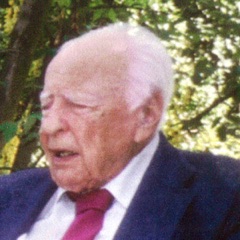
Hans-Georg Gadamer Truth and Method, 1960
Gadamer deepens the idea with his account of play as something we enter and take part in, rather than simply control for our own purposes. “All playing is a being-played,” he wrote. Once a walk has a target, you’re back in charge of it, and that may be the trouble.
Photo: Leena Ruuskanen, CC BY 3.0
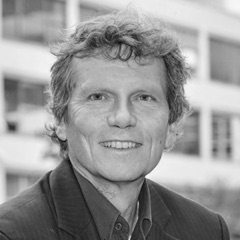
Hartmut Rosa The Uncontrollability of the World, 2018
Rosa brings in a contemporary connection: the pressure to make more of the world accessible, controllable and useful can undermine the very experiences of meaningful connection we’re pursuing. His word for what goes missing is resonance, and you can’t produce it on demand.
Martin Heidegger The Question Concerning Technology, 1954
Heidegger saw a whole age heading this way, in which a river, a forest, and eventually people themselves show up as resources standing by to be used. He called it standing-reserve. The Usefulness Tax is what that feels like on a Tuesday afternoon.
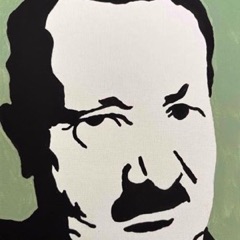
The painting is mine.
Edward Deci and Richard Ryan self-determination theory
There’s psychology behind it too. Deci and Ryan’s self-determination theory examines how external controls and rewards can undermine the motivation that comes from within, while recognising that outside reasons needn’t be controlling or harmful. A review they ran with Richard Koestner in 1999, of 128 studies, found that tangible rewards for something people already enjoyed tended to undermine their interest in it.
Where it gets complicated
Not every purpose is a tax
There’s an important counterargument. Sometimes external purposes enrich an activity. A paid musician may discover possibilities unavailable to the amateur. A paid teacher may find extraordinary pleasure in teaching. So the Usefulness Tax isn’t the same as getting paid.
Nor is every external purpose an intrusion. Sometimes having a deadline, a responsibility or an audience draws us deeper into an activity. It can provide resources, discipline and opportunities that weren’t previously available.
So the question becomes: under what conditions does purpose enrich participation, and when does it begin to impoverish it? Now there’s a philosophical investigation worth making.
My best guess is that the tax arises at the moment an additional purpose begins governing the activity’s worth. You no longer ask whether you enjoyed writing something. You ask whether enough people read it. A good conversation becomes disappointing because nothing actionable emerged. An afternoon reading Bachelard feels wasted because you didn’t produce a Substack note.
The cost isn’t necessarily that you stop enjoying the activity. It’s that your enjoyment has acquired a condition.
And there’s a further complication: the fear of paying the tax might itself become another reason to monitor what you’re doing.
Even the survey walk isn’t a clean escape. Birdwatchers have a word, twitching, for dropping everything to tick off a rare bird, and a list that once drew people out into the hedgerows can start hurrying them straight past.
The difficult questionWhen does having a reason to do something begin to interfere with the reasons you loved doing it?
Admit oneOpen-air cinemaComing soon
A short film
There’ll be a film of this one, three or four minutes long. When it’s done it’ll play here and in the open-air cinema.
Provisional
Field status
Open to correction
This is a working concept, a way of describing an experience that deserves closer attention. It might survive further investigation. It might need refining. It might turn out to be better explained by a philosopher who’s been dead for two hundred years. That’s part of the enjoyment.
If you think I’ve got it wrong, or you’ve paid the tax on something I haven’t thought of, I’d like to hear about it.