n.The apparent clarity created by abundant, ready-made answers that can make the questions and assumptions most worth examining harder to see.
What did the answer stop you asking?
johnstoszkowski.comProvisional
The note
A light so bright it’s hard to see
We tend to imagine that more answers produce greater understanding. But what if the opposite sometimes happens?
You have a difficult question. Within seconds, AI offers a polished explanation. You read it, feel satisfied and move on. Yet the answer may have stopped you noticing that your original question contained a dubious assumption. It’s like a light so bright it becomes difficult to see.
Answerglare isn’t information overload. That’s what happens when you’re confronted with more information than you can comfortably process. Answerglare can happen with a single answer: one concise, articulate, convincing response.
The response might be accurate. But its very fluency can create a premature sense of completion. You feel you understand something because the explanation is clear, and clarity of expression and depth of understanding aren’t the same thing.
An answer can be correct without being adequate to the enquiry that actually matters.
An everyday example
Is it time to change careers?
You’re considering a change of career. You’re not sure whether you’re bored, exhausted, unfulfilled or simply going through a difficult patch. So you open a chatbot and ask how you know whether it’s time to change careers.
Within seconds, you have a beautifully organised explanation. There are warning signs, reflective questions, pros and cons, perhaps even a decision matrix. It’s sensible advice. You read it and feel rather pleased. You have an answer.
But perhaps you never stopped to ask why you believed changing careers was the relevant decision in the first place. Maybe the issue has little to do with your career. Maybe you’re exhausted. Maybe you’ve lost interest in a particular ambition. Maybe what you really want is to spend more time with your family. Or perhaps the question isn’t whether to change careers but why you’ve come to regard work as the main thing that decides whether your life is going well.
The answer may have been perfectly reasonable. But it was an answer to a question you hadn’t properly examined.
Something to try
Ask it, then look at the question
Pick a question and you’ll get an answer straight away, and a perfectly sensible one. Then turn the glare down and look at what you asked.
Assistant
Ask anything.
Easy to read, easy to believe
In 1999 Rolf Reber and Norbert Schwarz showed people statements such as “Osorno is in Chile”, printed in colours that were either easy or hard to read against a white background. The easy-to-read statements were judged true more often. The effect was small, but it’s been found again and again in different forms: when something is easy to take in, it tends to feel right. A well-formatted answer is very easy to take in.
Not to be confused with
Similar species
A few near neighbours, and how to tell them apart in the field.
Information overloadMore information than you can comfortably process. Answerglare can happen with a single answer. It’s not the quantity that blinds you, it’s the brightness.
MisinformationThe answer is wrong. Answerglare is stranger, because the answer can be entirely right and still end the enquiry too soon.
The illusion of explanatory depthLeonid Rozenblit and Frank Keil’s name for how sure we are that we understand a zip or a toilet, until we’re asked to explain one. Answerglare is the borrowed version: the understanding feels like ours because somebody explained it so well.
Automation biasTrusting an automated suggestion over your own judgement. That’s about who you believe. Answerglare is about what you stop asking.
Earlier sightings
Who spotted it before me
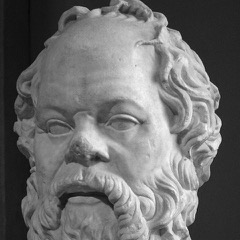
Socrates as Plato wrote him, around 400–350 BC
I’d begin with Socrates. The dialogues repeatedly challenge the assumption that having a plausible answer means we understand the question. Some of the most important moments come when somebody who seems confident discovers that their explanation doesn’t survive examination.
The perplexity that follows, aporia, isn’t necessarily a failure. It can be the beginning of genuine enquiry. In the Meno, Meno complains that talking to Socrates leaves him numb, as if he’d been stung by a stingray. That numbness is the opposite of glare.
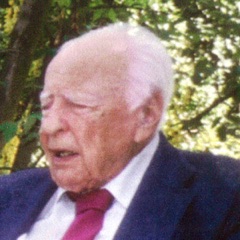
Hans-Georg Gadamer Truth and Method, 1960
Gadamer treats questioning as part of understanding itself. A genuine question opens possibilities rather than simply requesting a piece of information. “The essence of the question is to open up possibilities and keep them open.” And an answer only makes sense within the horizon the question set up.
He also noticed something counterintuitive in Plato: “contrary to the general opinion, it is more difficult to ask questions than to answer them.” So what happens when answers arrive so quickly that we scarcely notice how the question was set up?
Martin Heidegger The Question Concerning Technology, 1954
Heidegger’s concern wasn’t simply that technology gives us more tools. “Technology is therefore no mere means. Technology is a way of revealing.” A technological way of relating to the world can make certain kinds of understanding dominant while concealing others.
I wouldn’t claim he anticipated generative AI. But his enquiry gives us a useful way of asking how immediate explanations might shape our relationship with questioning itself. He ended that essay: “For questioning is the piety of thought.”
Where it gets complicated
Not an argument against answers
Of course, the opposite can happen too. AI can introduce us to unfamiliar thinkers, expose assumptions, generate objections and help us ask much better questions. Answerglare shouldn’t become an argument against AI. In fact, one of the more interesting questions is whether the same technology can both produce it and dispel it.
Nor is this nostalgia for some golden age when people supposedly thought more deeply. Sometimes an immediate answer frees you to ask a far more interesting question. The task is to tell those situations apart, and the problem lies in our relationship to the answer, not necessarily in the machinery that produced it.
Which leaves a harder question: could an explanation be perfectly accurate and still diminish our understanding, by ending an enquiry too soon? I’ve written about something nearby in Why not just ask AI?
When was the last time an answer made you stop thinking, rather than helped you think further?
The difficult questionWhen does receiving an answer make us less likely to notice that we’ve been asking the wrong question?
Admit oneOpen-air cinemaComing soon
A short film
There’ll be a film of this one, three or four minutes long. When it’s done it’ll play here and in the open-air cinema.
Provisional
Field status
Open to correction
This is a working concept, a way of describing an experience that deserves closer attention. It might survive further investigation, it might need refining, or it might turn out to be better explained by a philosopher who’s been dead for two hundred years. That’s part of the enjoyment.
If you think I’ve got it wrong, or you’ve caught an answer doing this to you, I’d like to hear about it. (You could ask a chatbot first. See what happens.)