n.The peculiar quiet that sometimes follows achieving a long-desired goal, when the wanting that gave your life its direction suddenly falls silent.
What were you hoping arrival would give you?
johnstoszkowski.comProvisional
The note
The quiet after the wanting
Arrival Silence isn’t necessarily disappointment. You might be perfectly happy with what you’ve achieved.
Nor is it simply boredom. There may be plenty that interests you. There’s just nothing organising it any more.
It’s the sudden absence of a future around which your life had been organised. For years, that future made decisions for you, gave shape to your days and made the sacrifices feel worthwhile. Its absence can feel strange even when the achievement is genuinely worthwhile.
Perhaps part of what we miss when we arrive isn’t the object of desire, but the experience of having a future that was pulling us towards something.
The achievement remains. The anticipation has gone.
An everyday example
And then it’s Tuesday
Imagine spending twenty years working towards something. Becoming a professor. Selling your business. Paying off your mortgage. Retiring early. Finally moving into the house you’ve always wanted.
For years, there’s been something ahead of you. Something organising your decisions, giving shape to your days and making sacrifices feel worthwhile.
Then you get there. For a while, it’s wonderful. The congratulations arrive. You celebrate. Perhaps you buy a rather expensive bottle of something.
And then it’s Tuesday. You’re sitting in the kitchen wondering what you’re supposed to do now.
Nothing has gone wrong. You’ve got exactly what you wanted. So why does something seem to have disappeared?
Something to try
Twenty years in one planner
Pick something to work towards, then arrive. Then stay for the Tuesday.
The planTwenty years, give or take
Yr 1PhD. Instant noodles.
Yr 2Left the band
Yr 3First paper. Rejected.
Yr 4Weekends: marking
Yr 5Missed Jo’s wedding (conference)
Yr 7Moved city for a contract
Yr 8Book proposal
Yr 9Gave up five-a-side
Yr 11Senior lecturer!
Yr 12The big grant
Yr 14Holidays with the laptop
Yr 16Stopped painting
Yr 17Head of department (sigh)
Yr 19Application: 40 pages
Yr 20ProfessorDone
Tues
Wed
Thurs
Fri
Sat
Next week
Next month
Next year
One day
Choose something you’ve spent twenty years working towards.
The silence could be an ending. It could also be space.
Not to be confused with
Similar species
There are a few phrases that sound close. Here’s how to tell them apart in the field.
The arrival fallacyThe psychologist Tal Ben-Shahar’s name for the belief that getting there will make you lastingly happy. That one is about happiness. Arrival Silence is about direction: you can see straight through the fallacy and still find the kitchen very quiet on Tuesday.
Hedonic adaptationGetting used to good things, so the glow fades. That explains why the champagne wears off. It doesn’t explain why something seems to have gone missing.
BoredomNothing seems interesting. In Arrival Silence plenty might be interesting. There’s just no longer one future organising it all.
DisappointmentThe thing turned out worse than you hoped. Here it may be exactly as good as you hoped. That’s what makes the quiet so odd.
Earlier sightings
Who spotted it before me
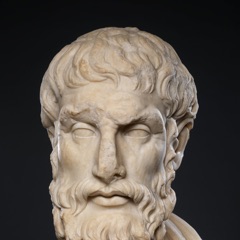
Epicurus Letter to Menoeceus, around 300 BC
Epicurus would see the quiet differently. He separated the pleasure of getting something from the pleasure of being without need, a settled state free of disturbance. “By pleasure we mean the absence of pain in the body and of trouble in the soul.” For him, a desire that has fallen silent isn’t a loss. It’s rather the point.
Which makes Arrival Silence interesting. If Epicurus is right, the quiet after arrival should feel like peace. Often it doesn’t, perhaps because what went quiet wasn’t a need but a direction.
Arthur Schopenhauer The World as Will and Representation, 1819
Schopenhauer offers one explanation. Desire arises from a sense of lack. Satisfying it provides temporary relief, but the relief doesn’t necessarily last. Another desire appears, or boredom takes its place. “Life swings like a pendulum to and fro between pain and boredom.”
On his account the quiet after arrival is just the pendulum reaching the other side. That’s good on why the glow fades. It’s less good on why Tuesday feels like losing something.
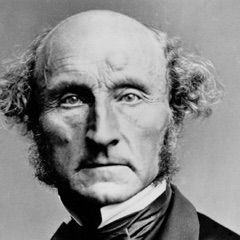
John Stuart Mill Autobiography, 1873
Mill had a rehearsal for it at twenty. He’d organised his life around one object, to be a reformer of the world, and chosen it partly because it could never be finished. He took comfort in placing his happiness in “something durable and distant, in which some progress might be always making, while it could never be exhausted by complete attainment.”
Then, in the autumn of 1826, he asked himself what would happen if every change he hoped for came about at once. Would that be a great joy? The answer was “No!”, and with it “the whole foundation on which my life was constructed fell down.” He’d only imagined arriving, and the wanting still went quiet.
Ernst Bloch The Principle of Hope, 1954–59
Bloch complicates matters. For him, human existence is profoundly unfinished. We’re oriented towards what hasn’t yet come into being. Hope isn’t simply wanting to possess an object; it involves anticipating possibilities that don’t yet exist.
In a 1964 conversation with Theodor Adorno he said that every realisation brings with it “a melancholy of fulfillment”, and he loved a line from Brecht’s Mahagonny: “Something’s missing.” If he’s right, arriving doesn’t use hope up. It just takes away the thing it was pointed at. I made a short film about him.
Where it gets complicated
An ending, or a space
It would be easy to turn this into another explanation of why success doesn’t make people happy. I don’t think that’s the interesting part. The interesting part is the disappearance of an organising future, and what it’s like to live for a while without one pulling you.
Because arrival can also be liberating. Once you’re no longer pursuing a particular future, other possibilities might become visible: some of them things you set aside on the way, some of them things you couldn’t have imagined while everything pointed one way.
The silence could be an ending, but it could also be space.
What if the strange feeling after arrival isn’t evidence that you’ve failed to find happiness, but that there’s still more life to take part in?
The difficult questionIf the destination was never going to be the end of wanting, what exactly were we hoping arrival would give us?
Admit oneOpen-air cinemaComing soon
A short film
There’ll be a film of this one, three or four minutes long. When it’s done it’ll play here and in the open-air cinema.
Provisional
Field status
Open to correction
This is a working concept, a way of describing an experience that deserves closer attention. It might survive further investigation, it might need refining, or it might turn out to be better explained by a philosopher who’s been dead for two hundred years. That’s part of the enjoyment.
If you think I’ve got it wrong, or you’ve sat in that kitchen yourself, I’d like to hear about it.