Start
Here’s the question they bring. There are two ways to take it.
Private Philosophy · The obvious objection
You can have Plato explained before the kettle’s boiled. So why spend time with an actual philosopher? Here’s my answer, with a few things to try along the way.
You can ask ChatGPT to explain Plato’s Cave and get a pretty reasonable introduction before the kettle’s boiled. Ask it how Plato differs from Nietzsche, and it’ll happily oblige. Ask it to make the explanation simpler, give you some examples, challenge your interpretation, or suggest what to read next, and it’ll keep going for as long as you like.
For anyone interested in learning, I think that’s amazing. I’ve spent most of my working life reading, researching, and teaching philosophy and the related business of how people learn, and the idea that someone who’s never opened a philosophy book can ask about Heidegger or Aristotle and get a decent explanation in seconds is genuinely exciting. I use AI myself, and it can be enormously helpful for getting started with unfamiliar material, exploring connections, and checking your understanding.
So why on earth would you want to spend time, and possibly a considerable amount of money, talking to an actual philosopher? Particularly one who occasionally needs a cup of tea, might disagree with you, and can’t promise to be available at three in the morning.
I think there’s a good answer. But it involves thinking a little more carefully about what we’re actually doing when we learn.
Around 2,400 years ago, Plato wrote a dialogue called Phaedrus, in which Socrates tells a story about the invention of writing. The Egyptian god Theuth presents it as a wonderful invention that will improve memory and make people wiser. King Thamus isn’t convinced. He worries that people will rely on written records instead of exercising their own memories, and end up with the appearance of wisdom while remaining largely ignorant.
Socrates goes further. Written words, he says, are rather like paintings. They look as though they might have something to say, but ask them a question and they’ll just keep giving you the same answer.
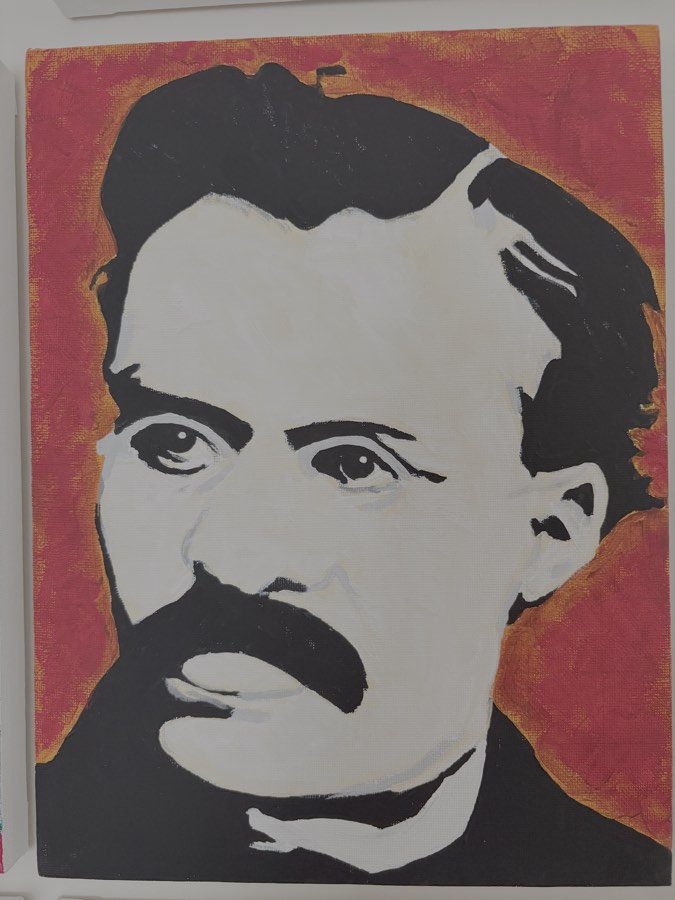
God is dead.
Friedrich NietzschePainted by John Stoszkowski
Ask my painting of Nietzsche a question.
Same answer. Every time.
Which is rather amusing when you consider that we only know about this complaint because Plato wrote it down.
And there’s an obvious difference between Plato’s concern and our present situation. AI can respond to questions. It can adapt explanations, follow an argument and challenge your reasoning. Increasingly, it can do things that sound remarkably like good philosophical teaching. So I wouldn’t use Socrates to argue that AI can’t contribute to genuine learning. That would be a rather lazy conclusion.
But I think his underlying worry remains interesting.
What happens when we become very good at accessing knowledge without becoming much better at understanding it? And how would we know the difference?
Imagine you’ve become interested in the nature of the self. You ask AI what David Hume thought about personal identity, and it explains his famous argument: when he examined his own experience, he never encountered a simple, permanent self. He found particular perceptions, feelings and thoughts. You ask how this compares with Buddhist accounts of non-self, and receive another helpful explanation.
Within an afternoon, you could cover territory that would once have required a considerable amount of reading. That’s wonderful. But what exactly have you learned? You can now describe what Hume found. Have you tried looking?
The explanation, in one line: Hume looked for his self, and only ever found perceptions.
Now try it yourself. It takes fifteen seconds.
What did you find?
“For my part, when I enter most intimately into what I call myself, I always stumble on some particular perception or other, of heat or cold, light or shade, love or hatred, pain or pleasure. I never can catch myself at any time without a perception, and never can observe any thing but the perception.”
David Hume, A Treatise of Human Nature (1739), Book 1, Part 4, Section 6
You’ve probably met that sentence before. It reads differently now.
Receiving an explanation and working your way towards understanding involve different kinds of activity. An explanation can make an idea available to you. Understanding develops through what you subsequently do with it. You have to make sense of the argument, recognise where you disagree, explore its implications and perhaps discover that something you previously took for granted isn’t quite as obvious as you thought.
Sometimes this happens quickly. Other times you can spend months reading someone before a particular passage finally makes sense. And occasionally, something you understood perfectly well in theory becomes much more interesting after you’ve lived a little more. You can return to the same book ten years later and find you’re reading something quite different, partly because you’ve changed in the meantime.
The words might be identical. The possibilities you recognise in them aren’t.
Here’s where I think the value of a good philosophical teacher becomes particularly interesting. Imagine someone arrives wanting to learn about Stoicism. Perfectly reasonable. Perhaps they’ve heard that Marcus Aurelius has something useful to say about dealing with difficult circumstances.
The question
Start
Here’s the question they bring. There are two ways to take it.
The Stoics separate what’s up to you (your judgements, choices and responses) from what isn’t (other people, events, the past). Put your effort into the first, and accept the second. Epictetus’s Handbook and Marcus Aurelius’s Meditations are good places to start.
Clear, correct and finished.
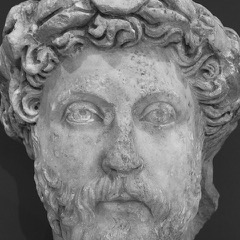
First conversation
We spend an enjoyable afternoon exploring the Stoics. I introduce Epictetus, explain the distinction between what is and isn’t up to us, and we examine some of the arguments.

A few weeks in
As we talk, I begin to suspect they’d find Zhuangzi even more interesting. Perhaps their fascination with controlling their reactions is connected with a much broader desire to make life predictable.
His cook carved oxen for nineteen years without blunting his knife, because he stopped forcing it and followed the gaps.
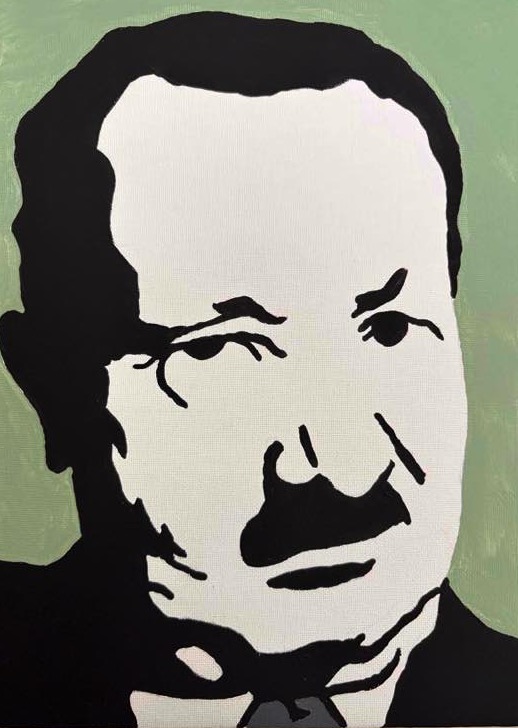
Six months later
We find ourselves discussing the same question through Heidegger, for whom care isn’t something we occasionally do. It’s the shape of being human at all. They’ve developed an interest they didn’t previously know they had.
Same starting point. One route arrives. The other is still going.
I love this part of teaching. You begin with something familiar, introduce an idea from somewhere unexpected, and suddenly there’s a whole new area to explore. Sometimes you can almost see the moment when somebody realises that the world contains possibilities they hadn’t considered.
AI can introduce unexpected thinkers too. You can even tell it to surprise you. But how do you know what to ask it to look for? A good teacher develops a sense of where somebody’s understanding is heading. They remember what interested them before, notice what they keep returning to and occasionally introduce something that cuts across the direction they expected to take. Sometimes that introduction is welcomed immediately. Sometimes it goes nowhere. And sometimes an idea somebody dismissed in February becomes the most interesting thing in the world to them in October.
There’s an enormous amount of judgement involved in knowing what to introduce, when to explain something and when to leave a question alone for a while. Aristotle had a name for that kind of judgement. In the Nicomachean Ethics he calls it phronesis, usually translated as practical wisdom: the capacity to deliberate well about living and acting, to understand the particulars of a situation and recognise what matters within it.
You can know a great deal about courage without knowing when courage is called for.
And you can have an extraordinary amount of information at your disposal without being especially good at deciding which bits deserve your attention. We’re acquiring increasingly powerful ways of answering questions. There remains the business of deciding which questions deserve to be asked.
Wisdom isn’t something another person can simply hand over to you, nor something you acquire automatically by reading enough philosophy. But you can spend a lifetime cultivating it. That’s what the word means, after all: philosophy is the love (philo) of wisdom (sophia). I can’t think of many things more worthwhile.
There’s another side to having a philosopher that’s harder to capture in the language of information and knowledge. A relationship has a history. If we meet regularly, I gradually get to know what interests you, and you get to know me too. We build up a shared understanding of the books we’ve discussed, the arguments we’ve disagreed about and the questions that keep returning.
It works both ways. Some of my favourite conversations have involved somebody asking a question I couldn’t answer particularly well. It sends me away thinking. I might spend the next week reading around the issue, then come back with something worth discussing. I’m still learning, after all.
The philosopher Hans-Georg Gadamer wrote about understanding as something that develops through encounters with perspectives beyond our own. A genuine conversation involves a willingness to have your understanding challenged by what another person brings, and you don’t get to decide beforehand everything that will emerge from it. Someone introduces an argument, the other person objects, a distinction becomes important, and suddenly you’re somewhere neither of you expected to end up.
Perhaps you’ve experienced that with a friend, a teacher or somebody you particularly enjoy talking with. You look at the clock and realise two hours have disappeared. I usually finish feeling more energised than when I started. It’s one of the reasons I still love teaching after all these years.
For some people, there’ll be no compelling reason to. They’ll happily explore philosophy through books, podcasts, videos and AI, discover wonderful things and develop their understanding independently. I think that’s fantastic. But other people might enjoy having someone alongside them: someone who gets to know them well enough to make increasingly interesting introductions, explain difficult ideas and have conversations that neither could have planned in advance.
The hope is that you become increasingly capable of thinking philosophically for yourself, developing interests and judgements that are genuinely your own. We’ve become so accustomed to justifying education through its practical benefits that the pleasure of becoming educated can almost seem like an insufficient reason to pursue it. Which is a shame.
The extraordinary availability of answers makes me more interested in what happens when we stop collecting them for a while and begin thinking properly about the questions.
There’s still an enormous amount we don’t understand, and an extraordinary number of people, living and dead, whose ideas are worth getting to know. I can’t imagine ever running out of things to talk about.
This page has Socrates’ problem, of course.
Ask it anything and it’ll give you the same answer. Which is why it ends with an invitation.
This pageWritten by John Stoszkowski
John Stoszkowski · Private Philosophy
I work privately with people who want to make philosophy part of their lives. We meet regularly, usually online, and explore whatever interests them. There are no prerequisites, and the first conversation is free.